Do you have to be friends with people to get opportunities?
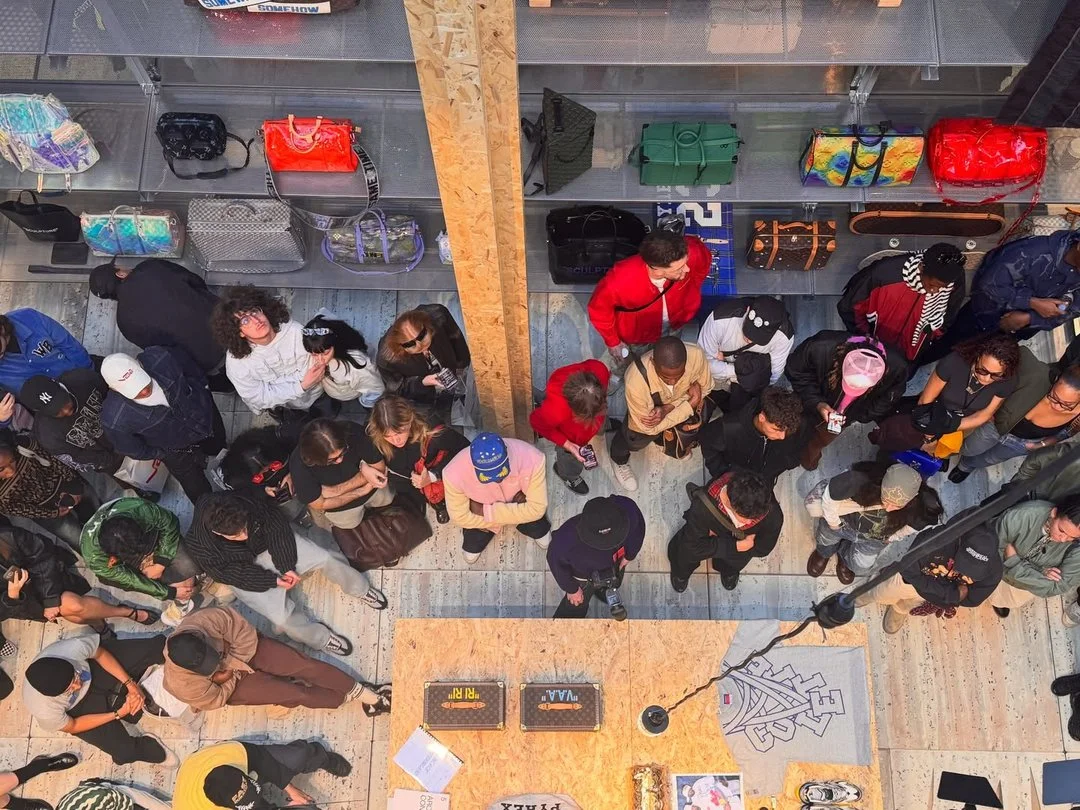
photo credit : @daftfabric
A few weeks ago, I saw a big campaign drop, a global brand, beautiful visuals, everywhere on social media. The photographer behind it had started shooting less than a year ago. He’d posted only a handful of images, nothing particularly groundbreaking. But one thing everyone knows about him is that she’s everywhere. He knows the right people.
This let me into a big spiral loop of social media stalking, where i jumped on profiles from profiles, to find out that most of the people I know who gets the big jobs, are not the one that curates their work the best on social media but the one that curate an aesthetic and a lifestyle. A corner of a wall, i candid photo of some hairs and blurry party photos. Never more than 5k followers, or always more than 100k, as if the in between gets stuck in the empty pool.
When we sat down with a friend recently and looked at it, we realized that maybe 80% of the work we’re currently doing comes from someone we already knew, someone we met through another project, a past collaboration or a mutual contact. It’s not necessarily a bad thing, but it makes you question what the real metric of success is. Are we being hired because of the quality of our work, or because of how easily people can reach us?
When I left Paris for a few months, everything stopped. No new calls, no projects, no emails that said “we’d love to have you onboard.” It’s like I had vanished from the map. Then, when I came back and started going out, cocktails, dinners, private events, my phone started buzzing again. The graph was almost perfect: the more I showed up, the more I worked.
What’s funny is that I didn’t feel that same dynamic in London. There, it’s almost the opposite. The more I work, the more my name circulates, the more people reach out, whether I’m physically in the city or not. It’s a system that seems to reward consistency and craft over presence, where credibility grows through what you do rather than where you appear. Paris, on the other hand, runs on connection. But when i spoke about this with some london locals, they reminded me that my experience was the foreigner one, they love a Paris expert so it’s always easy to get my name on board.
And it also raises a question about productivity. If most opportunities come from relationships rather than output, does it even make sense to be constantly producing, constantly creating? Is it still necessary to push yourself to make more if your work isn’t what actually drives new opportunities but your connections do? The creative economy keeps telling us to keep going, to stay consistent, but what if consistency isn’t what opens doors anymore?
It can also create another issue, one that’s more subtle. French magazine Barbès approached the subject in one of their posts. Many of us come from backgrounds that made it hard to enter these circles in the first place. Yet once we get in, we sometimes end up reproducing the same patterns of exclusivity we used to criticize. The same small rooms, the same names circulating, the same familiar faces getting called again and again. That can easily turn into a new kind of entre-soi, one that closes the door behind us without even meaning to.
The goal shouldn’t be to get to the top and fight over the same jobs, but to build together, to collaborate, to open the door wider, to reach back and help the next generation in. Because the system only evolves when we do.
And still, networking alone means nothing. You can know everyone, go everywhere, but when the opportunity finally lands in front of you, if you don’t have the skills to match it, you’ll eventually stagnate. The shine only lasts as long as the work behind it.
In the end, it’s all connected. The work, the network, the consistency, the practice, the way you share and promote what you do. Success is a mysterious combination of all these factors, and that equation looks different for everyone. What matters is staying authentic, because when you do, the process itself becomes lighter. You get to enjoy it, grow through it, and meet people who genuinely inspire you along the way.
written by Lyna Malandro
