When will North African culture be more than a moodboard in fashion?
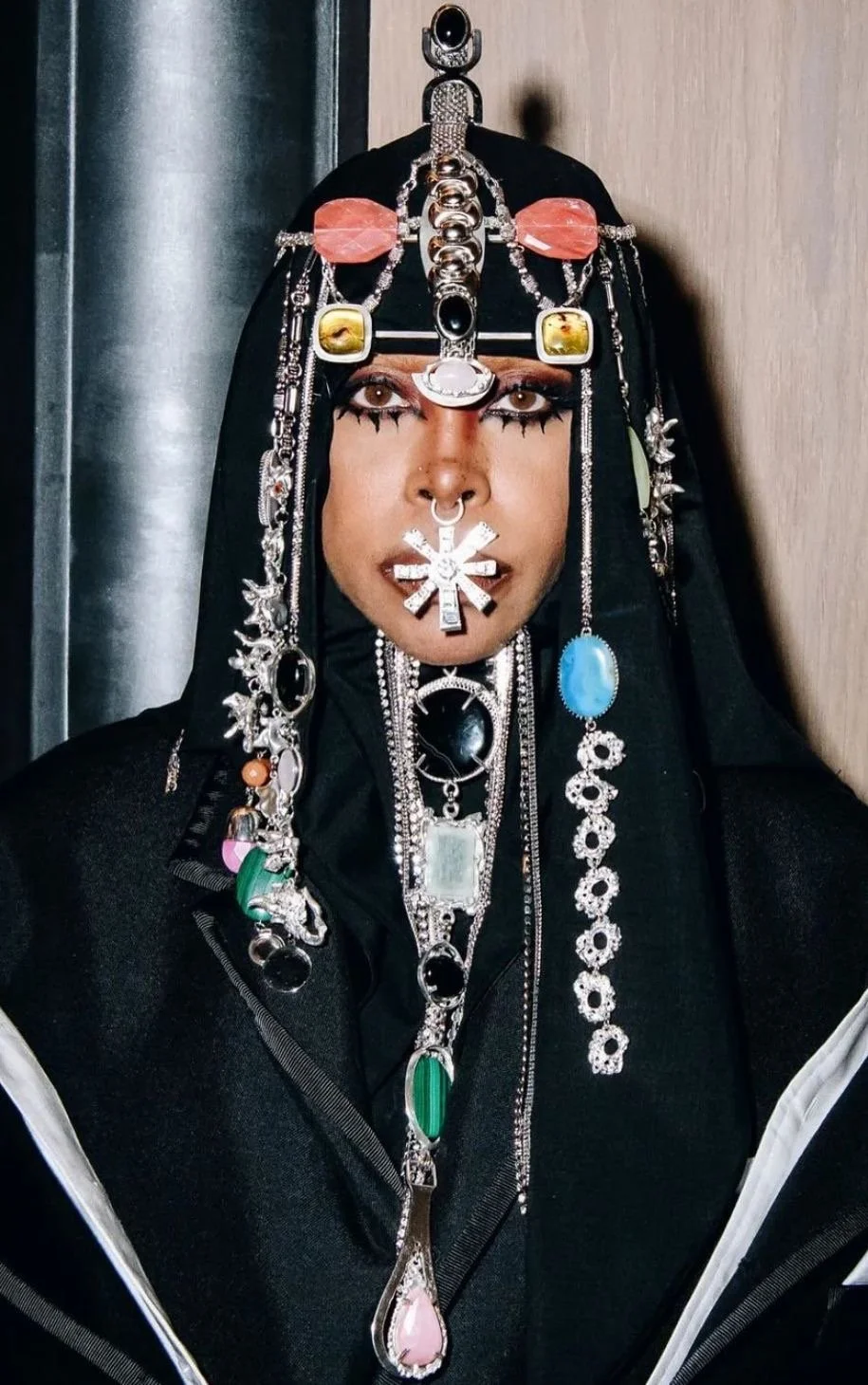
photo credits : @erykahbadu
Fashion has a habit of renaming what it doesn’t understand. What’s called “bohemian” today can often be North African culture in disguise, stripped of its origin, softened for Western taste, and sold back as a trend. The embroidered patterns, the silver jewelry, the flowing silhouettes, the warm earth tones… all come from Amazigh hands, Tunisian weavers, Moroccan artisans, Algerian goldsmiths. And every stitch carries memory.
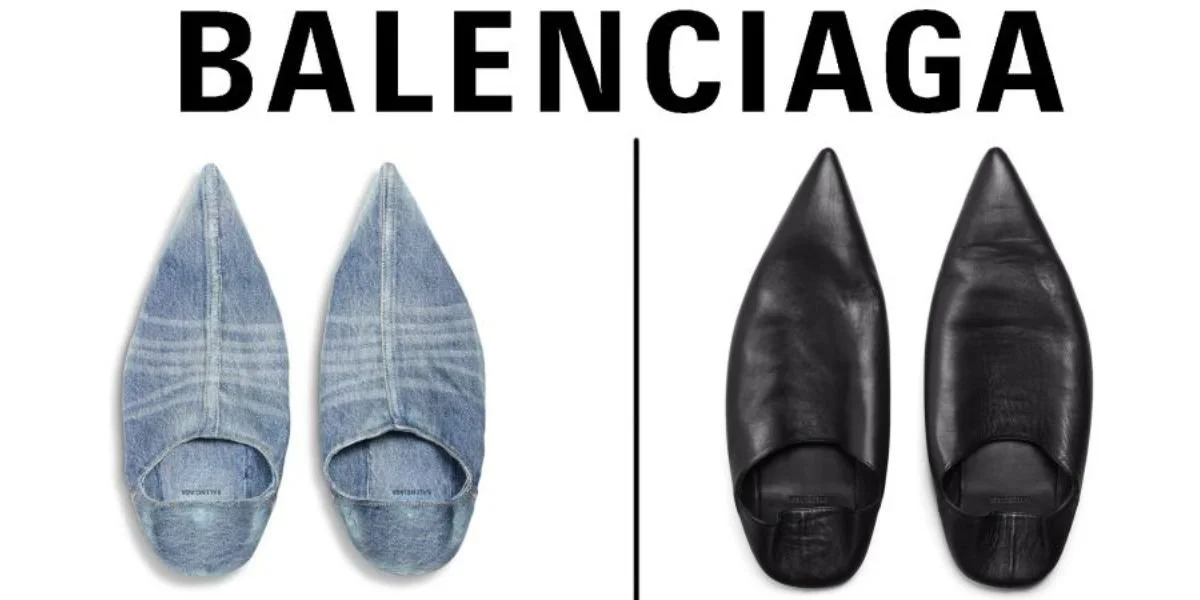
Fashion has always been fascinated by elsewhere. It looks everywhere, borrows everything but it rarely names. And what it doesn’t fully understand, it romanticizes. In that process, North Africa is no exception. Instead of saying “this is North African”, fashion rebrands it into something more marketable, adapted to a Western frame. Because to call it what it truly is would mean giving credit. It would mean admitting that what’s trending today has existed for centuries.
The point isn’t to ask whether North African culture is influential. Every culture leaves a trace somewhere. The real question is why that influence still disappears once it reaches the moodboard ? When will fashion stop using it as an aesthetic and start recognizing it as a voice?
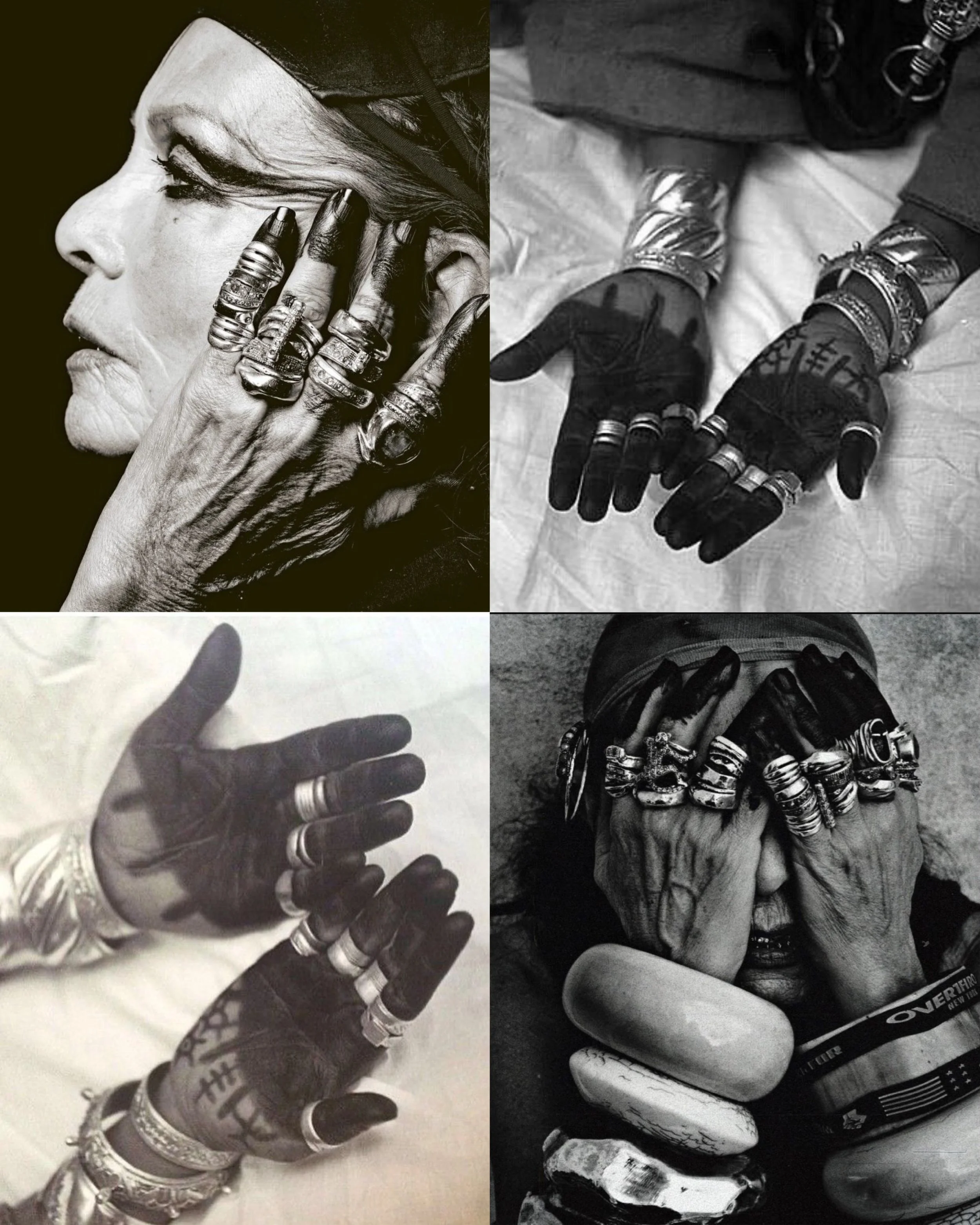
« this is sooo Michèle Lamy‑coded… » except it’s not. It’s Amazigh‑coded… and yes, Michèle actually gives it credit !
The inspiration is deeply Amazigh, rooted in the North African culture she has long admired. Lamy herself has often spoken about visiting Tunisia as a teenager, encountering Berber women, and discovering beauty in their traditions.
From henna to tribal markings, those encounters left a lasting impression on her personal style and daily rituals. While some articles and editorial pieces interpret her signature forehead line and layered jewelry as Amazigh‑inspired, it’s clear that Lamy’s aesthetic owes as much to North African culture as it does to her Parisian avant‑garde life, and she has never shied away from acknowledging that influence.
photo credit : Vogue Hong Kong
And that kind of erasure goes far beyond fashion. Take Dune. One of the most celebrated sci-fi worlds recently, yet everything about it, from the language of the Fremen to their relationship with the desert, is rooted in North African and Amazigh mythology. The names, the costumes, the philosophy : all of it borrows from Maghrebi and Arabic culture. But no one ever says it out loud. It’s become one of the most iconic fictional worlds in cinema, yet the culture that inspired it remains unnamed. That silence is telling.
Fashion’s Beautiful Borrowing or Silent Erasure?
North Africa has long been a mirror for Western imagination, a place that designers visit to feel something “authentic,” only to bring it back polished, simplified, and made global. Yves Saint Laurent built entire collections after being transformed by Marrakech, yet how often is that influence named or credited?
What luxury calls “slow fashion” was never a trend here, it was simply respect; for material, for time, for the person making the piece. Real sustainability wasn’t a slogan, it was a way of life. In North Africa, craft is not an aesthetic but a language : one that turns clothes into memories and gives colors a lineage to carry. Patterns are tied to a precise time and space : you can tell which tribe, city, or heritage you belong to just by the way you dress.
Fashion doesn’t hide its love for North Africa, it just rarely says who it’s loving. So the question remains: Can fashion claim diversity if the cultures it borrows from are still watching from the sidelines? Maybe fashion doesn’t need another moodboard. Maybe it needs to listen.
And it’s not just fashion. The same misunderstanding happens in pop culture too. The Who’s That Girl video by Rema and Ayra Starr, shot in Morocco, is a perfect example. Visually, it’s beautiful, but culturally, it’s confusing. The clip blends every possible stereotype: belly dance, shisha smoke, men in souks with Tuareg scarves, fire breathers… an “Arab dreamscape” where the Maghreb and the Middle East blur into one.
The irony is that this time, it’s not Western artists. It’s African ones. Rema and Ayra are Nigerian, and that’s what makes it even more interesting. It shows how, even within Africa, North African culture is often seen through a distant, generalized lens.
Nilusi, a French-Sri Lankan artist is featured on the music production. They probably called her to create a sound that carries South Asian tones that, but combined with Moroccan imagery, it create this floating sense of “Oriental” identity which is familiar, but undefined.
This music video proves that the misunderstanding isn’t just Western anymore. Even in the Global South, the Maghreb is often misread, seen as a backdrop rather than a world of its own. It’s about realizing how easy it is to flatten cultures, to merge them until they lose their shape.
North African culture was never waiting to be seen. It’s always been there, shaping sound, movement, and image in ways the world often doesn’t notice. What matters now is not recognition, but depth, the ability to see it for what it really is.
And there’s hope too. A whole generation is working to bring nuance back. Artists like Nayra, Ino Casablanca, and El Grande Toto are shaping a sound that feels deeply local yet universal. Brands like Atlal From Galbi and Chez Nous reinterpret identity through design, storytelling, and craftsmanship. And creators like Selina Abes are redefining representation online, reminding us that visibility can also mean education, not just aesthetics.
What’s even stronger is that they’re not trying to represent anything or explain the culture they live in. They’re simply continuing something, each in their own way, with their own stories and nuances. They build on what’s always been there and make it their own, naturally. And that’s where the strength lies.
What’s missing is not relevance. It’s recognition. What fashion owes isn’t visibility. It’s honesty.
Maybe the point isn’t to stop borrowing. It’s to start understanding. To give names, to share credit, to tell stories right. Because what makes culture beautiful is how it’s carried, not how it looks.
Written by Sara GUREWAN
